
Medicine is the most competitive degree on the planet. Not in one country — in every country. The students who secure places at Harvard, Oxford, Cambridge, or Johns Hopkins are not simply the ones with the best grades. They are the ones who started preparing earlier, thought more carefully about what admissions tutors actually look for, and built a profile that went beyond the classroom.
This guide cuts through the noise. Below, you will find the ten universities that consistently dominate global medical rankings in 2025–2026 — what makes each one distinctive, what entry actually requires, and what students who want to compete at this level should be doing right now.
Rankings draw on QS World University Rankings, Times Higher Education, and the Complete University Guide 2025. Where institutions perform differently across systems, we note it. No single table tells the whole story — but the names at the top are consistent enough to be meaningful.
The World’s Top 10 Medical Universities (2026)
Before diving into individual institutions, a note on methodology. Global university rankings — QS, Times Higher Education, Shanghai (ARWU) — each use slightly different criteria: research citations, faculty-to-student ratios, employer reputation, international diversity, and clinical impact. No single ranking tells the complete story. The list below synthesises the most consistent performers across major ranking systems in 2025–2026, with a focus on what each institution actually offers students pursuing medicine.
1. Harvard University (USA)
Harvard Medical School is, by most measures, the most prestigious medical institution in the world. Founded in 1782, it sits within one of the most concentrated ecosystems of medical excellence on the planet — affiliated with Massachusetts General Hospital, Brigham and Women’s Hospital, and the Dana-Farber Cancer Institute, among others.
What sets Harvard apart is not simply its name. It is the density of Nobel laureates on faculty, the volume of NIH funding flowing into its research programmes, and the clinical breadth available to students from their earliest years of study. The MD programme at Harvard is a four-year postgraduate degree — meaning applicants must already hold an undergraduate qualification, typically with a strong science foundation and an exceptional MCAT score.
For international students, Harvard is genuinely competitive regardless of nationality. The school actively recruits globally, and roughly 30% of each intake comes from outside the United States. Tuition fees are significant — currently above $67,000 per year — but Harvard’s financial aid programme is among the most generous in the world, with need-based support available to international students.
If there is one word that defines the Harvard Medical School experience, it is ambition — institutional, academic, and personal. Students who thrive here are those who arrive already thinking beyond the standard curriculum.
2. University of Oxford (UK)
Oxford’s medical programme — the BM BCh — is consistently ranked among the two or three best in the world, and its structure is unlike almost any other. The first three years are devoted entirely to pre-clinical study, with students completing a full BA in Medical Sciences before progressing to clinical training. This produces graduates with an unusually deep theoretical foundation — and it is precisely this intellectual rigour that Oxford’s admissions process is designed to identify.
Entry requirements are demanding. Applicants must sit the BMAT (or, increasingly, the UCAT), achieve A-level grades of A*AA, and navigate one of the most challenging interview processes in higher education. Oxford tutors are not looking for students who can recite facts — they are looking for students who can think, argue, and change their mind in real time.
Oxford medicine benefits from a collegiate structure that shapes daily academic life in a meaningful way. Students are taught in small tutorial groups — often one or two students with a single tutor — a format that produces a depth of engagement with material that larger lecture-based programmes simply cannot replicate. This tutorial system is, in many ways, the defining feature of an Oxford medical education.
For international students, Oxford medicine is open and genuinely achievable — but the bar is high and the preparation must begin early.
3. University of Cambridge (UK)
Cambridge and Oxford are often mentioned in the same breath, but their medical programmes differ in meaningful ways. Cambridge’s course — leading to the MB BChir — is similarly structured around a pre-clinical and clinical division, with students spending their first three years on the Natural Sciences Tripos before specialising in medical sciences. The result is a programme with an exceptionally strong scientific foundation, producing graduates who are as comfortable in a research laboratory as they are on a hospital ward.
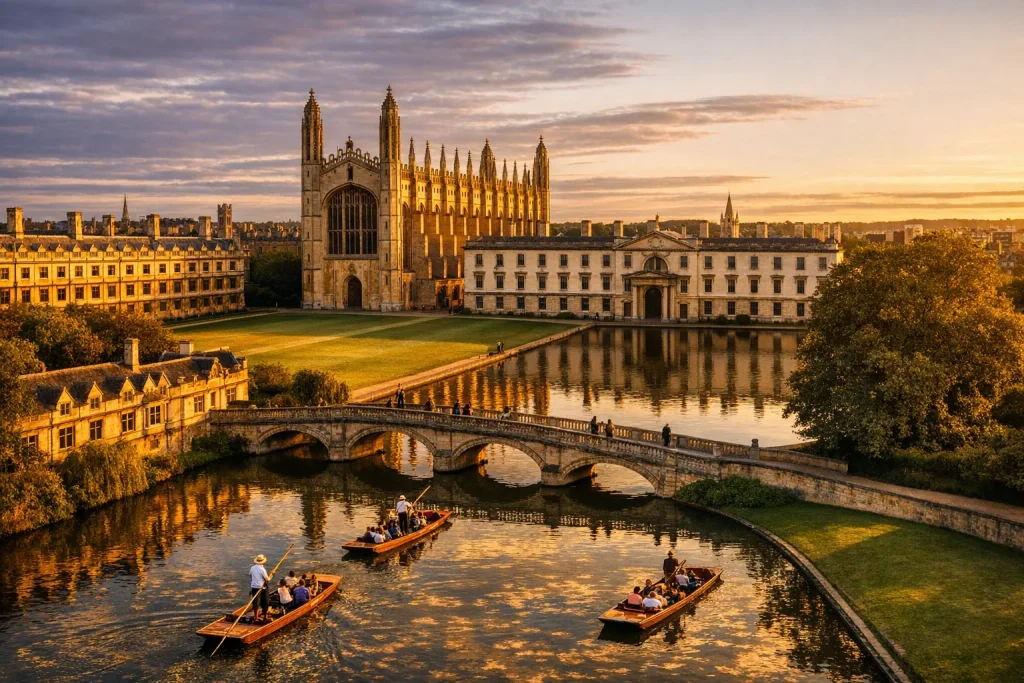
Cambridge medicine is taught within the collegiate system, with each student belonging to one of the university’s historic colleges — including Queens’ College, one of the oldest and most academically distinguished in Cambridge. The college environment shapes not just accommodation and social life, but the rhythm of academic study: supervisions (Cambridge’s term for small-group tutorials), essay deadlines, and the intellectual culture of the institution are all mediated through college life.
In the Complete University Guide 2025, Cambridge was ranked the number one university in the UK — a distinction that reflects the breadth and depth of excellence across all disciplines, including medicine. For ambitious students who want to understand not just how medicine works in practice, but why it works at a fundamental scientific level, Cambridge represents one of the finest environments in the world.
Admissions are competitive, requiring A-levels at AAA, strong performance in the BMAT or UCAT, and success at interview. International students are welcome and well-represented across Cambridge colleges.
4. Johns Hopkins University (USA)
Johns Hopkins occupies a unique position in the history of modern medicine. Its School of Medicine, founded in 1893, effectively created the template for how medical education is structured in the United States — integrating research, clinical practice, and teaching in a way that was, at the time, revolutionary. That legacy continues to define the institution today.
Hopkins is consistently ranked first or second in the US for research funding from the National Institutes of Health, and its affiliated hospital — Johns Hopkins Hospital in Baltimore — has spent decades at or near the top of US News & World Report’s hospital rankings. For students interested in research-intensive medicine, there are few environments more stimulating.
The MD programme at Hopkins is four years, postgraduate, and extraordinarily competitive. The average admitted student has a GPA above 3.9 and an MCAT score in the 97th percentile or above. What distinguishes successful applicants, however, is rarely academic score alone — it is the quality of their research experience, the depth of their clinical exposure, and the coherence of their personal narrative as a future physician-scientist.
5. Imperial College London (UK)
Imperial College London is among the most scientifically rigorous universities in the world, and its Faculty of Medicine reflects that identity precisely. Unlike Oxford or Cambridge, Imperial operates a more integrated curriculum — clinical and scientific content are woven together from year one, meaning students encounter patients and clinical reasoning earlier in their studies.
Imperial’s location in London is itself a significant advantage. Students have access to some of the world’s busiest and most diverse teaching hospitals — including St Mary’s, Hammersmith, and Charing Cross — exposing them to a breadth of clinical cases that smaller university towns simply cannot offer. London’s population is one of the most internationally diverse of any city on earth, which means clinical training at Imperial prepares students for medicine as it is actually practised in a globalised world.
Imperial is a consistent top-ten performer in global medical rankings, and its graduates are highly sought after by postgraduate training programmes in both the UK and internationally. For students with a strong scientific bent who want clinical integration from the outset, Imperial represents one of the most compelling options in the UK.
6. University College London (UK)
UCL’s medical school — UCL Medical School — is one of the largest and most research-active in the United Kingdom, with deep ties to University College Hospital and the broader NHS teaching hospital network in London. UCL has historically been at the forefront of medical research: it was here that the structure of DNA was first clarified by Rosalind Franklin, and the institution continues to punch above its weight in fields ranging from neuroscience to global health.
The MBBS programme at UCL runs over five years and is structured to develop both the scientific and clinical dimensions of medical practice in parallel. Students benefit from early patient contact, a research intercalation year, and access to one of the most extensive biomedical library and laboratory networks in Europe.
UCL is also notable for its international outlook. A significant proportion of its student body comes from outside the UK, and the school has established research and clinical partnerships across six continents. For students who see medicine as an inherently global profession — which, increasingly, it is — UCL offers an environment that reflects that reality from day one.
7. Stanford University (USA)
Stanford School of Medicine, located in the heart of Silicon Valley, occupies a position unlike any other medical school in the world. Its proximity to the global technology industry has produced a distinctive culture at the intersection of medicine, engineering, and entrepreneurship — one that is reshaping how the next generation of physicians thinks about healthcare innovation.
Stanford’s MD programme is among the most flexible in the United States, allowing students to pursue research, global health, or entrepreneurial tracks alongside their core clinical training. The school has produced an extraordinary number of physician-innovators — people who have gone on to found biotech companies, lead global health organisations, and pioneer new approaches to diagnostics, therapeutics, and healthcare delivery.
For students who want to practise medicine and shape it — who see clinical care and innovation as complementary rather than competing — Stanford is perhaps the most forward-looking environment available.
8. Karolinska Institutet (Sweden)
Karolinska Institutet in Stockholm is Europe’s largest medical university by research output, and it holds a distinction unlike any other institution on this list: its faculty are responsible for awarding the Nobel Prize in Physiology or Medicine each year. That responsibility is not merely symbolic — it reflects the institution’s position at the absolute frontier of biomedical research.
Karolinska offers undergraduate and postgraduate medical programmes taught in both Swedish and English, and it attracts students and researchers from across the world. Its affiliated university hospital — Karolinska University Hospital — is one of the largest in Scandinavia and provides a clinical environment of genuine breadth and complexity.
For students interested in research-intensive medicine in a European context — and who value a culture that prizes scientific rigour above institutional prestige — Karolinska is among the most intellectually serious options available.
9. University of Melbourne (Australia)
The University of Melbourne’s MD programme is consistently ranked as the leading medical degree in the Asia-Pacific region, and it has built a reputation for producing graduates who combine clinical excellence with a strong research foundation. The programme is postgraduate — four years, entry requiring a prior undergraduate degree — and is modelled in part on the North American system, with a strong emphasis on problem-based learning and early clinical integration.
Melbourne’s affiliated teaching hospitals include the Royal Melbourne Hospital and St Vincent’s, both of which serve complex, diverse patient populations and offer clinical training of genuine depth. The university’s location in one of the world’s most liveable cities, combined with Australia’s growing profile as a destination for international medical students, makes Melbourne an increasingly compelling option for globally ambitious applicants.
10. University of Toronto (Canada)
The University of Toronto’s Temerty Faculty of Medicine is Canada’s most research-intensive medical school and one of the top-ranked in the world. It is affiliated with eleven fully affiliated teaching hospitals — including Toronto General, Sick Kids, and Mount Sinai — creating a clinical training environment of extraordinary breadth.
Toronto’s MD programme is four years, postgraduate, and highly competitive. The school has particular strengths in surgery, transplantation, and global health, and its graduates occupy leadership positions in medicine, research, and health policy across the world. For students considering North American medicine who want the quality of a US top-ten school in a more accessible admissions environment, Toronto is an institution that deserves serious attention.
UK vs USA — Which Is Better for Studying Medicine?

This is the question every internationally minded medical applicant eventually asks — and there is no universal answer. The right choice depends on where you want to practise, how you learn best, and what kind of doctor you want to become. But the differences are real and worth understanding before you commit.
Key Differences in the Medical Degree Structure
In the UK, medicine is an undergraduate degree. You apply straight from secondary school, aged 17 or 18, and spend five or six years moving from pre-clinical science into clinical training. Oxford and Cambridge add a further twist — three years of pure academic study before clinical work begins, producing graduates with an unusually deep scientific foundation.
In the US, medicine is postgraduate. You complete a four-year undergraduate degree first — in any subject, though typically biology, chemistry, or a related science — then sit the MCAT and apply to medical school. The MD itself is another four years, followed by residency. The total journey from secondary school to independent practice is typically 11–14 years.
The UK route is faster. The US route, at its best, produces physicians with broader academic backgrounds and more research exposure before they ever enter a clinical environment.
Entry Requirements Compared
UK medical schools require A-levels (or equivalent) at the highest grades — typically A*AA minimum for Oxford and Cambridge — plus strong performance in the UCAT or BMAT admissions test, and a rigorous interview process. Work experience in a clinical or care setting is expected, not optional. For a full breakdown of what international applicants need to prepare, see our guide to How To Get Into Medical School In The UK: Requirements For International Students in 2026.
US medical schools evaluate undergraduate GPA, MCAT scores, research experience, clinical volunteering, and personal essays. The process is longer, more multidimensional, and — at the top schools — intensely competitive at every stage.
One practical consideration for international students: UK medicine allows you to qualify and begin practising earlier. For families weighing the investment of a medical education, that timeline matters.
Career Outcomes After Graduation
Both systems produce world-class physicians. UK graduates enter the Foundation Programme and move into specialty training through a structured NHS pathway. US graduates match into residency programmes — a process that is itself competitive — before specialising.
Where a US degree has a consistent edge is in research. The combination of undergraduate study, MD training, and residency produces physicians who are often more deeply embedded in academic medicine. For students who see research, innovation, or global health leadership as their destination, the US system — at its upper tier — remains the benchmark.
For students who want to practise clinical medicine at the highest level, as quickly and efficiently as possible, the UK — and specifically Oxford or Cambridge — is hard to beat.
How to Get Into a Top Medical University

There is no shortcut here — but there is a pattern. Students who secure places at the world’s top medical schools share certain characteristics, and most of them are buildable with the right preparation and enough time.
Academic Requirements and Qualifications
The academic bar at elite medical schools is, bluntly, as high as it gets. Oxford and Cambridge require A*AA at A-level minimum, with Chemistry almost universally mandatory and Biology strongly preferred. Imperial and UCL sit at AAA, though in practice the vast majority of successful applicants exceed this. In the US, a GPA of 3.8 or above is the baseline for competitive programmes — at Harvard and Johns Hopkins, the average admitted student is above 3.9.
International qualifications are accepted and well understood by admissions offices at all ten institutions on this list. The IB Diploma is widely recognised — typically 38–40 points for UK top schools, with 7s in Higher Level sciences. Students studying national curricula in Brazil, Nigeria, the UAE, or elsewhere should check each university’s equivalency requirements directly, as these vary and are updated regularly.
One number that surprises many families: grades alone will not get you in. Every student in the applicant pool for Oxford medicine has exceptional grades. What differentiates them is everything else.
Work Experience and Extracurriculars
UK medical schools are explicit about this: clinical work experience is a requirement, not a bonus. Admissions tutors want evidence that you have spent meaningful time in a healthcare setting — shadowing a GP, volunteering in a hospital, working in a care home — and that you have reflected seriously on what you observed. The experience itself matters less than what you took from it.
Research experience carries significant weight, particularly for US programmes and for Oxford and Cambridge. Even a summer spent assisting in a university laboratory, or completing a structured research project, signals the kind of intellectual initiative that elite admissions processes reward.
Extracurricular activities matter — but not in a box-ticking way. Admissions tutors are looking for evidence of character: leadership, resilience, genuine curiosity. A student who has captained a sports team, performed at a high level in music, or led a community initiative is demonstrating something real about who they are — and that matters in medicine more than in almost any other profession.
Personal Statement for Medicine
The personal statement — or its US equivalent, the AMCAS personal statement and secondary essays — is where most strong applications either consolidate their case or quietly unravel it.
The most common mistake is chronology: listing everything you have done, in order, with a sentence of reflection attached to each. Admissions tutors read thousands of these. What holds attention is specificity — a moment in a clinical placement that changed how you thought about patient communication, a paper you read that raised a question you could not stop thinking about, a decision that tested your values and clarified them.
The strongest personal statements do not summarise a CV. They reveal a mind. They show that the applicant has already begun thinking like a medical professional — with curiosity, ethical awareness, and an understanding that medicine is as much about people as it is about science.
For students currently in secondary school, the time to start building this narrative is not in the final year before application. It is now.
What Is The BMAT (And Who Still Uses It)
The BMAT (BioMedical Admissions Test) was previously required by some top UK universities, including University of Oxford and University of Cambridge. However, in recent years, many institutions have moved away from the BMAT, making the UCAT the primary admissions test for most applicants.
That said, requirements can change, so students should always check the latest admissions criteria for each university they are applying to.
The BMAT traditionally focused more on scientific knowledge and essay writing, whereas the UCAT is more skills-based and time-intensive.
How to Prepare for Medicine Before University

Why Pre-University Programmes Matter for Medical Applicants
Work experience in a clinical setting is valuable — but it is often passive. You observe, you absorb, and if you are lucky, someone takes the time to explain what they are doing. Pre-university academic programmes offer something different: structured engagement with medical science, guided by people who teach at the university level, in an environment designed to stretch you intellectually rather than simply expose you to a hospital corridor.
For admissions tutors, the distinction matters. A student who has completed a rigorous pre-university medicine programme can speak with authority about physiology, clinical ethics, or diagnostic reasoning — not because they memorised a textbook, but because they worked through these ideas in small-group tutorials with experienced academics. That kind of engagement is visible in a personal statement. It shows up in an interview. It is exactly the evidence that competitive applications are built on.
What to Look For in a Medicine Summer School
Not all pre-university programmes are equal, and admissions tutors know it. A two-day taster event and a two-week residential programme at a world-leading university are categorically different experiences — and they read differently on an application.
The markers of a serious programme are consistent: university-level academic content delivered by qualified tutors, small group sizes that allow genuine intellectual exchange, a structured project or assessment that produces written work, and a formal outcome — a letter of recommendation from a senior academic, a certificate of completion, or both.
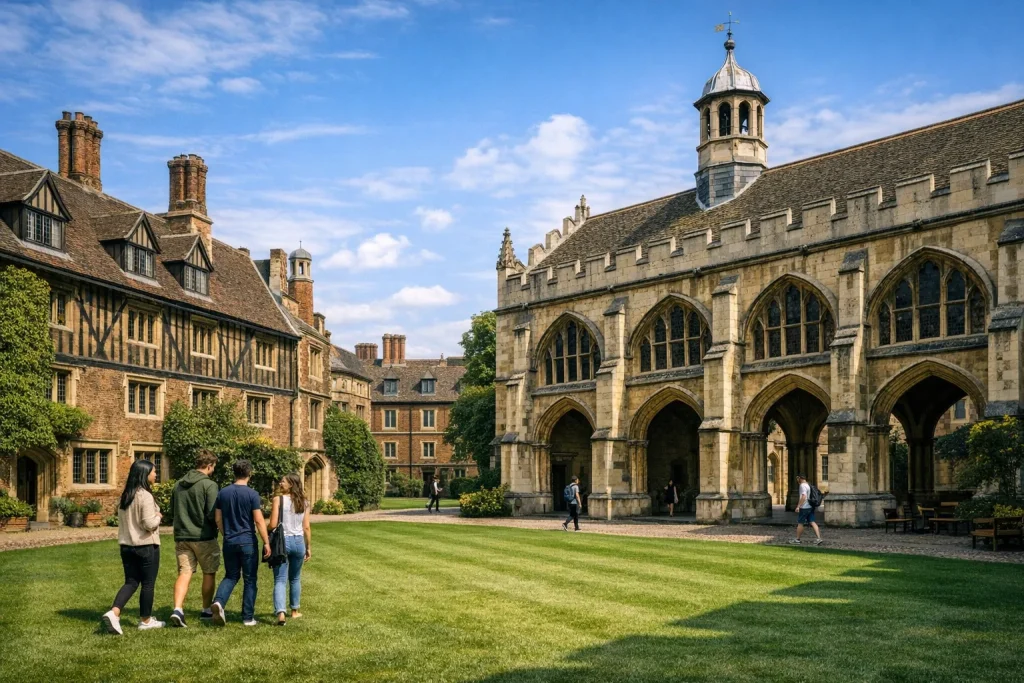
Oxbridge Scholars Medicine and Health Programme delivers exactly this. Hosted at Queens’ College, University of Cambridge — ranked number one in the Complete University Guide 2025 — the Medicine track is led by Dr Kalvind Vadi and taught by senior medics from Oxford, Cambridge, UCL, and Imperial. Over two weeks, students work through anatomy, physiology, pathology, clinical communication, and medical ethics in university-style tutorial sessions, before completing a team industry project developing a pharmaceutical product from brief to presentation.
Students leave with written feedback, a tailored letter of recommendation from a senior academic, and — more importantly — a significantly clearer sense of what medical study actually demands of them. For ambitious 14–17 year olds with serious university ambitions, it is one of the most credible pre-university medicine experiences available in the UK.
FAQ: Top Medical Universities in the World in 2026
Which is the best university in the world for medicine?
By most global ranking systems, Harvard Medical School holds the top position — but “best” depends heavily on what you are looking for. For undergraduate medicine with the deepest scientific foundation, Oxford and Cambridge are the strongest options in the world. For research-intensive postgraduate training, Harvard, Johns Hopkins, and Stanford are in a category of their own. The right answer is the institution that best matches your learning style, career goals, and geographic preferences.
Is it harder to get into medical school in the UK or the US?
Both systems are extremely competitive at the top level, but they are difficult in different ways. UK medicine requires exceptional A-level grades, strong admissions test scores, and clinical work experience — all assessed at age 17 or 18. US medicine demands a strong undergraduate record built over four years, plus MCAT performance, research experience, and a compelling application narrative. The US process is longer; the UK process is earlier and in some ways less forgiving of a single weak year.
Can international students study medicine at Oxford or Cambridge?
Yes. Both universities actively welcome international applicants, and a significant proportion of each medical cohort comes from outside the UK. International students are assessed on the same academic criteria as domestic applicants. Tuition fees are higher for international students — currently around £30,000–£35,000 per year at Oxford and Cambridge for medicine — but both universities offer bursary and scholarship support worth investigating early.
How can a 14–17 year old start preparing for a top medical school?
Start earlier than feels necessary. Build clinical exposure through volunteering or shadowing. Read beyond the school curriculum — medical journals, ethics case studies, science writing aimed at a general audience. And consider a structured pre-university programme that offers genuine academic depth in a university environment. Oxbridge Scholars runs a two-week Medicine programme at Queens’ College, Cambridge each summer, designed specifically for ambitious students aged 14–17 who are serious about medicine as a future path.
Does attending a summer school at Cambridge improve my university application?
A summer programme at Cambridge will not guarantee admission anywhere — and any programme that implies otherwise should be treated with scepticism. What it can do, done seriously, is give you real academic content to draw on in your personal statement, a letter of recommendation from a qualified tutor, and a clearer understanding of what university-level medicine actually demands. Those are meaningful advantages in a competitive process — provided the programme itself has genuine academic credibility.
