
Choosing a residential Cambridge summer school for a 14–17-year-old is exciting — and also a serious decision. For parents, the biggest “make-or-break” factor is rarely the subject. It’s whether daily life is genuinely safe, well-supervised, and age-appropriate.
This guide breaks down what Cambridge summer school accommodation usually looks like, what “pastoral care” should mean in practice, and the safeguarding signals that separate high-quality programmes from risky ones. It also includes a parent-ready checklist of questions to ask before you pay a deposit.
(Note: safeguarding is the action taken to promote children’s welfare and protect them from harm. In the UK, good safeguarding includes prevention, clear reporting routes, and support when problems emerge.)
What “college accommodation” means for a teen summer school in Cambridge
Many Cambridge summer schools host students in university college buildings. That typically means:
- Student bedrooms (often private, sometimes shared — it depends on the provider and venue)
- Shared bathrooms or ensuite options (varies)
- Communal spaces for downtime and socialising
- A dining hall for meals
- On-site staff presence and a set of under-18 rules for movement, behaviour, and sign-in/out
The key point: “college accommodation” sounds impressive, but parents should still verify the basics — room arrangements, overnight supervision, curfews, and what happens if a student feels unwell or unsafe.
What Oxbridge Scholars states about accommodation and daily life (example)
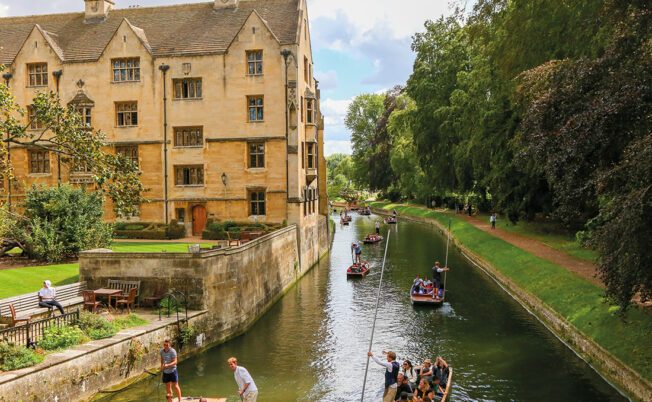
In its programme brochure, Oxbridge Scholars says students live and learn at Queens’ College, University of Cambridge, staying in college accommodation with access to communal areas and meals in the historic dining hall. The brochure also lists daily-life elements such as private or shared rooms, balanced meals (dietary needs catered for), guided evening activities and weekend excursions, and quiet study time.

Supervision and pastoral care: what parents should expect (not just hope)
Most reputable programmes use the term pastoral care to describe non-academic support — the human system that keeps teenagers safe and well.
For under-18s, strong pastoral care usually includes:
- 24/7 supervision (including evenings and overnight)
- Clear boundaries (curfews, permitted areas, sign-in/out procedures)
- Welfare check-ins (especially for younger students, first-time travellers, and international students)
- On-excursion safeguarding (headcounts, staff oversight, clear meeting points)
- A defined escalation pathway if something feels wrong (who the student speaks to first, and what happens next)
Oxbridge Scholars’ FAQ page says the programme fee includes mentoring and 24/7 supervision alongside accommodation and meals.
The safeguarding policy “must-haves” you should look for
A strong provider will publish clear policies — and those policies should feel operational (real roles, real processes), not generic marketing text.
Here’s what to check.
1) Named safeguarding leadership and clear reporting routes
Look for a Designated Safeguarding Lead (DSL) (and ideally a deputy), plus clear instructions on how concerns are reported and logged.
Example: Oxbridge Scholars’ Safeguarding & Child Protection Policy lists named safeguarding roles (DSL and Deputy DSL) and describes rapid reporting to the safeguarding lead and use of a secure incident system.
2) Safer recruitment and staff training
You want evidence of staff vetting, induction, and ongoing safeguarding training. In Oxbridge Scholars’ safeguarding policy, “safer recruitment” and annual training are explicitly mentioned.
3) Supervision ratios and risk assessments
Under-18 residential programmes should be able to explain how they set supervision ratios and how they risk-assess activities, excursions, and visiting speakers. Oxbridge Scholars’ safeguarding policy references “appropriate supervision ratios” and “recorded risk assessments,” including visiting-speaker checks.
4) Peer-on-peer safety (student behaviour, harassment, bullying)
Safeguarding isn’t only “adult risk.” It includes peer-on-peer concerns, online harms, and harassment. Oxbridge Scholars’ safeguarding policy explicitly lists peer-on-peer and online harms among the risks it addresses.
5) What happens if an allegation is made
Parents should see a process for allegations about adults (escalation, documentation, and external referral thresholds where appropriate). Oxbridge Scholars’ policy includes a section on allegations about adults and same-day escalation where thresholds are met.
Online safety and phones: the overlooked part of safeguarding
In teen residential settings, a large percentage of issues are digital: bullying, pressure to share images, inappropriate group chats, and privacy breaches in dorm spaces.
A good online safety approach usually includes:
- Clear rules on photography/video (especially in bedrooms/bathrooms)
- Guidance on privacy and reporting
- Device-free times/areas to support sleep and community norms
- Staff boundaries (no personal social media contact)
Oxbridge Scholars’ Online Safety Policy includes controls such as device-free times/areas, no photography in bedrooms/bathrooms, no sharing others’ images without consent, and staff not engaging with students on personal social media (official channels only).

Medical support: what to clarify before arrival
Every programme is different, but parents should get clear answers on:
- Who handles minor illness and how parents are contacted
- Medication rules (self-carry vs. supervised storage, depending on age and medication type)
- What happens off-site (clinics, urgent care, emergencies)
- Insurance expectations (many programmes require comprehensive cover)
Oxbridge Scholars’ Terms & Conditions state that comprehensive travel/medical and cancellation insurance is required.
Practical accommodation questions parents should ask (copy/paste checklist)
Use this list to compare providers — the best programmes answer these quickly and clearly.
Accommodation & facilities
- Are rooms private or shared — and how are roommates assigned?
- Are bathrooms shared or ensuite (and how is privacy managed)?
- Are boys/girls housed separately (if relevant for your child)?
- What are the rules for visitors and access to bedrooms?
- What is the process if a student feels unsafe in their room?
Supervision & boundaries
- What does 24/7 supervision look like overnight (who is on duty, where are they)?
- What are curfew rules and sign-in/out procedures?
- Can students go into town unaccompanied? If yes, under what rules and at what ages?
Safeguarding governance
- Who is the Designated Safeguarding Lead (DSL) and how can students contact them?
- How are concerns recorded and escalated (including peer-on-peer issues)?
- What staff vetting and safeguarding training is in place?
Online safety
- Are there rules about photos/videos in bedrooms and bathrooms?
- Are staff allowed to connect with students on personal social media?
Meals, wellbeing, inclusion
- How are dietary needs handled (allergies, religious diets, vegetarian/vegan)?
- What support exists for homesickness or anxiety — and how are parents updated?
Where to find Oxbridge Scholars policies (and why that matters)
Oxbridge Scholars links its key welfare policies (including safeguarding and online safety) in its “Our Policies” area and programme brochure hub. This is a good sign — because parent decisions should be based on written procedures, not only sales conversations.

FAQ
Is a Cambridge summer school the same as a “summer camp”?
Not necessarily. Many Cambridge programmes are designed as pre-university experiences with structured teaching, residential accommodation, and set supervision rules for under-18s. Oxbridge Scholars positions itself as a two-week Cambridge-based programme hosted at Queens’ College.
Do under-18s get supervised at night?
Reputable residential programmes should explain overnight supervision clearly (duty staff, welfare contacts, escalation routes). Oxbridge Scholars states it provides round-the-clock supervision and pastoral care.
Will my child have a private room?
It depends on the programme and venue. Oxbridge Scholars’ brochure indicates private or shared student rooms, so parents should confirm the exact room type offered for their session.
How are dietary requirements handled?
Many programmes can cater to common dietary needs, but you should confirm allergies and medical requirements in writing. Oxbridge Scholars’ brochure states dietary needs are catered for.
What should I look for in a safeguarding policy?
At minimum: a named safeguarding lead (DSL), clear reporting routes, staff training, risk assessments, and procedures for allegations and online safety. Oxbridge Scholars’ safeguarding policy describes safer recruitment, training, recorded risk assessments, and named safeguarding roles.
