The UK summer school market is large, loud, and — if you are navigating it for the first time — genuinely difficult to read. Hundreds of programmes compete for attention each year, most of them making broadly similar claims about transformative experiences, world-class tutors, and life-changing outcomes.
Some of those claims are accurate. Many are not. The gap between a serious academic programme and an expensive social experience with a prestigious postcode is real — and it matters considerably more for a student building a competitive university application than the marketing materials tend to suggest.
This guide cuts through the noise. It covers what to look for before you book, the strongest programmes available in 2026 by subject and age group, and how to match the right programme to what your child actually needs. No programme pays to appear here. The recommendations are based on academic credibility, residential quality, and outcomes — the factors that matter to students and admissions tutors alike.
What To Look For In A UK Summer School
Most families start with location and price. Both matter — but neither tells you what the programme actually delivers. A two-week residential at a Cambridge college and a two-week residential at a rented conference centre an hour outside Oxford are not the same experience, even if both describe themselves as UK summer schools. The right questions are about substance.
Academic Credibility
Who is teaching, and what are their credentials? There is a meaningful difference between tutorials led by practising academics from Oxford, Cambridge, UCL, or Imperial and sessions delivered by recent graduates or generalist instructors. The first produces genuine intellectual engagement. The second produces a pleasant experience that is difficult to write about meaningfully in a personal statement.
Group size matters too. A seminar of eight students and a lecture of eighty are categorically different learning environments. Ask any programme directly: what is the maximum tutorial group size? If the answer is vague, that tells you something.
Location and Residential Experience
Not every programme described as a “Cambridge summer school” or “Oxford summer school” takes place inside a college. Some use affiliated venues; others rent school facilities or conference centres nearby. For students applying to Oxbridge, living inside a historic college — dining in the hall, studying in the tutorial rooms, navigating the collegiate environment — is a meaningfully different preparation from staying in a hotel down the road. It is worth confirming exactly where students sleep and where they are taught before booking.
Outcomes and Credentials
What does a student leave with? A certificate of attendance and a tailored letter of recommendation from a senior academic are not the same document. One confirms presence. The other confirms performance, intellectual engagement, and potential — and that is the document that carries weight in a university application. Ask specifically: who writes the reference, what is their academic affiliation, and is it tailored to each student or templated? A serious programme will answer all three without hesitation.
Best UK Summer Schools By Category (2026)
Different programmes serve different purposes. The best summer school for a 14-year-old interested in medicine is not the same as the best programme for a 17-year-old building a business school application. What follows is an honest assessment of the strongest options by subject area and academic ambition.
Best for Medicine
Oxbridge Scholars — Medicine Track, Queens’ College Cambridge
The Medicine track at Oxbridge Scholars is among the most academically serious pre-university medicine programmes available in the UK. Taught by senior medics from Oxford, Cambridge, UCL, and Imperial — led by Dr Kalvind Vadi, whose education programme has reached over 34,000 students worldwide — the two-week residential covers anatomy, physiology, pathology, clinical communication, and medical ethics at a level that goes well beyond secondary school curricula.
Students complete a team industry project developing a pharmaceutical product, produce assessed written work, and leave with a tailored letter of recommendation from a senior academic. Optional enhancement days include a medical simulation centre experience and a surgical workshop. Hosted at Queens’ College, Cambridge — ranked number one in the Complete University Guide 2025 — the residential setting reinforces the academic content in a way that few programmes can match. For students aged 14–17 with serious medical ambitions, this is the strongest option currently available in Cambridge.
Medsim Summer School
Medsim focuses specifically on clinical simulation — students work through realistic patient scenarios using medical simulation technology. Less academically broad than Oxbridge Scholars, but strong for students who want hands-on clinical exposure specifically. Worth considering as a complement to a more academic programme rather than a standalone preparation.
Villiers Park — Medical Sciences Programme
Villiers Park’s medical sciences offering is strong academically and specifically targeted at high-achieving students from state schools in the UK. Less relevant for international students, but worth noting for its academic rigour.
Best for Business and Finance
Oxbridge Scholars — Business & Finance Track, Queens’ College Cambridge
Led by Matthew Imison — an economics educator and former finance professional with experience across the UK, Asia, and Africa — the Business & Finance track covers strategic planning, financial management, ethical leadership, and global operations. Students develop business plans, analyse real-world case studies, and present to a panel at the end of the two weeks. The combination of academic content and industry project makes this one of the more practically oriented business programmes available at this level.
Oxford Royale — Business and Entrepreneurship
Oxford Royale operates at significant scale, with thousands of students across multiple UK locations each summer. The business offering is broad and well-structured, with a stronger social and activity component than Oxbridge Scholars. Better suited to students who want a first introduction to business concepts in a university environment than to those building a specific application narrative.
LSE Summer School
The London School of Economics runs a summer school primarily aimed at older students — typically 16 and above, with some programmes for university-age participants. The academic content is serious and the LSE brand carries genuine weight. For students specifically interested in economics, finance, or social science, it is worth investigating alongside Cambridge-based options.
Best for AI and Computer Science
Oxbridge Scholars — AI & Computer Science Track, Queens’ College Cambridge
Led by Bobby Sohal — a microelectronic engineer with over 20 years of experience working with global organisations and government agencies — the AI & Computer Science track covers Python, algorithms, data science, cybersecurity, and large language models including how systems like ChatGPT are trained and deployed. Students build algorithms, work with real datasets, and explore the ethical dimensions of AI including bias, data privacy, and automation. For students interested in technology careers or computer science degrees, this is one of the few pre-university programmes that engages with AI at a level that reflects how the field actually works.
Oxford Scholastica — Computer Science
Oxford Scholastica offers a computer science track taught in Oxford, with a focus on programming fundamentals and algorithmic thinking. Solid academic content, though less industry-integrated than the Oxbridge Scholars AI track. Worth considering for younger students or those newer to programming.
Best for Humanities and Law
Cambridge Immerse — Humanities and Law Programmes
Cambridge Immerse has an established offering across humanities subjects including philosophy, history, law, and English literature. The academic content is solid and the Cambridge residential experience is genuine. For students interested in humanities or law who are not specifically targeting a science or business track, Cambridge Immerse is one of the stronger options in the market.
Oxford Summer Courses
Oxford Summer Courses offers subject-specific programmes across a wide range of humanities and social science disciplines. Teaching quality varies by subject and year, but the Oxford residential setting and the breadth of subject options make it a reasonable choice for students still exploring their academic direction.
Best for Younger Students (Ages 13–15)
Most serious academic programmes — including Oxbridge Scholars — are designed for students aged 14 and above, with the strongest content aimed at 15–17 year olds. For younger students at the lower end of this range, the priority is finding a programme that is genuinely intellectually stimulating without being pitched at a level that produces frustration rather than engagement.
Oxbridge Scholars accepts students from age 14, and the programme is structured to work across the 14–17 age range without diluting content for older participants. For students under 14, a broader exploration programme — one that introduces multiple subjects rather than specialising — is likely more appropriate than a subject-specific residential.
Best Summer Schools In Cambridge (2026)
Cambridge attracts more summer school programmes than any other city in the UK — partly because of the obvious brand value, and partly because the collegiate system means college buildings are genuinely available for external use during the summer months when students are away. The result is a market that ranges from genuinely excellent to aggressively mediocre, often at similar price points.
For a detailed comparison of the main Cambridge programmes side by side, see our guide to Oxbridge Scholars vs Other Cambridge Summer Schools (2026). What follows is a summary of the strongest options.
Oxbridge Scholars
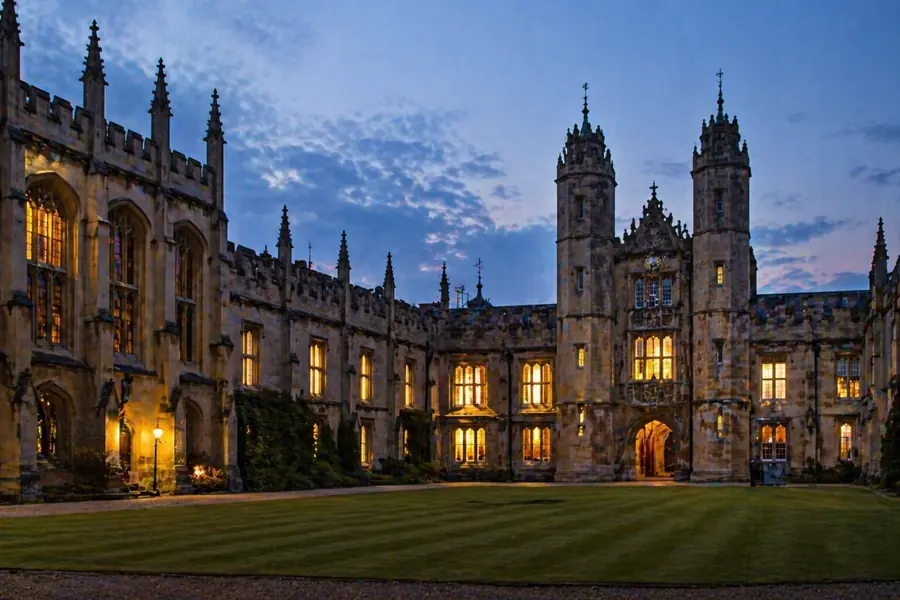
Hosted exclusively at Queens’ College — one of the oldest and most architecturally distinguished colleges in Cambridge, ranked number one in the Complete University Guide 2025 — Oxbridge Scholars runs two two-week sessions each summer for students aged 14–17. Three specialist tracks: Medicine, Business & Finance, and AI & Computer Science. Small tutorial groups, senior tutors, assessed work, and a tailored letter of recommendation. The most academically serious specialist programme currently operating in Cambridge at this age range.
Session 1: 5–18 July 2026. Session 2: 19 July – 1 August 2026. Full price £5,395. Applications open at oxbridge-scholars.co.uk.
Cambridge Immerse
One of the longer-established names in the Cambridge summer school market, Cambridge Immerse offers two-week subject-specific programmes across a broad range of disciplines including medicine, law, economics, engineering, and the humanities. Academic content is solid, group sizes are reasonable, and the Cambridge residential experience is genuine. A good option for students who want subject depth in an area outside the three tracks Oxbridge Scholars covers — particularly humanities and law.
Oxford Royale at Cambridge
Oxford Royale operates at considerable scale, running programmes across multiple UK locations including Cambridge. The Cambridge offering uses college facilities and provides a genuine residential experience. The programme is broader and more socially oriented than Oxbridge Scholars or Cambridge Immerse — better suited to students looking for a first taste of Cambridge life than to those building a specific academic application. Group sizes tend to be larger, which reflects the operational model.
Kings Education Cambridge
Kings Education runs English language and academic programmes in Cambridge aimed primarily at international students. The offering is more focused on English language development and cultural immersion than on subject-specific academic depth. Worth considering for students whose primary goal is improving academic English in a Cambridge environment, rather than subject preparation for university admission.
The honest summary of the Cambridge market: for subject-specific academic depth in Medicine, Business, or AI, Oxbridge Scholars is the strongest current option. For humanities and law, Cambridge Immerse is a credible alternative. For broader exploration or a lighter introduction to Cambridge life, Oxford Royale provides a well-organised if less academically intensive experience.
Best Summer Schools In Oxford (2026)
Oxford’s summer school market is smaller than Cambridge’s but has several strong offerings — particularly for students interested in humanities, law, and the social sciences. The collegiate setting is similar to Cambridge, and the brand carries equivalent weight for university applications.
Oxford Scholastica Academy
Oxford Scholastica is one of the most academically serious programmes operating in Oxford, with subject-specific residential courses across medicine, law, philosophy, computer science, and the humanities. Taught in Oxford college buildings, with small group sizes and a genuine focus on academic depth. A credible option for students whose subject interests align with Scholastica’s offering — particularly philosophy, PPE, and law, where Oxford has specific strengths that Cambridge-based programmes do not replicate as directly.
Oxford Summer Courses
Oxford Summer Courses offers a wide range of subject options across two-week residential programmes in Oxford. The breadth of subjects is a genuine advantage for students still exploring their academic direction — over 40 subjects are available, from architecture to neuroscience. Teaching quality varies more than at smaller specialist programmes, but for students who want genuine Oxford immersion across a broad subject menu, it is a reasonable choice.
Oxford Royale Academy
Oxford Royale’s Oxford programmes are among their most established offerings, with a long track record and a large international student body. The experience is more socially oriented than academically intensive — strong on the Oxford residential experience, excursions, and peer community, lighter on the kind of subject depth that generates personal statement material. For younger students or those prioritising cultural immersion over academic preparation, it is well run and well organised.
One practical note for families comparing Cambridge and Oxford programmes: the two cities are 90 minutes apart by train, and the summer school markets in both are distinct. A student who does not get into their preferred Cambridge programme is not automatically better served by an Oxford alternative — the right question is always which programme best matches the academic goal, regardless of city.
Best Summer Schools In London (2026)
London summer schools operate in a different register to Cambridge and Oxford programmes. The collegiate residential experience is not available in the same way — London universities are not set up around colleges in the Oxbridge sense — but what London offers instead is scale, diversity, and proximity to some of the world’s leading institutions in finance, law, medicine, and technology.
LSE Summer School
The London School of Economics runs one of the most academically rigorous summer programmes in the country, primarily aimed at students aged 16 and above. Subject focus is tight — economics, finance, law, political science, and related social sciences — but within those fields the content is genuinely university-level. For students with clear ambitions in economics or finance who want an LSE credential on their application, this is the strongest London option. The brand carries real weight in those fields specifically.
Imperial College London — Summer School
Imperial runs summer programmes in science, engineering, and computing for secondary school students. The content reflects Imperial’s institutional strengths — technically demanding, research-oriented, and practically focused. For students interested in engineering, biomedical science, or computing who want London-based exposure to one of the world’s top technical universities, Imperial’s summer offering is worth investigating alongside Cambridge alternatives.
King’s College London — Summer Programmes
King’s runs subject-specific summer programmes across medicine, law, and the humanities, with strong links to its NHS teaching hospital network. The medicine offering in particular benefits from King’s clinical partnerships — students get exposure to a large London teaching hospital environment that is different in character to the more academic Cambridge medicine experience. For students who want clinical breadth in a major city hospital setting, King’s is a genuine alternative to Cambridge-based medicine programmes.
London programmes generally suit students who want urban immersion alongside academic content — the city itself is part of the experience in a way that Cambridge and Oxford, however beautiful, are not. For students from major international cities who find smaller university towns less compelling, London programmes may be a better personal fit even if the collegiate experience is different.
How To Choose The Right Programme For Your Child
The best summer school is not the most expensive one, or the one with the most recognisable name. It is the one that matches what your child actually needs at this stage of their academic journey — and that delivers something genuine rather than something that looks good in a brochure.
Three questions cut through most of the noise.
First: what is the goal? If your child has a clear subject direction and is building a competitive university application, they need academic depth, qualified tutors, and a formal outcome — assessed work and a credible letter of recommendation. If they are earlier in their journey and still exploring, a broader programme with more subject flexibility may serve them better. For a full framework on evaluating any UK summer programme before booking, our Complete Guide For Parents: How To Choose A Summer School In The UK (2026) covers every dimension worth considering.
Second: does the programme actually deliver what it promises? Ask directly about tutor credentials, group sizes, and what students produce by the end of two weeks. Vague answers are informative. A serious programme knows exactly who is teaching, in groups of what size, producing what outcomes.
Third: is the setting right? For students applying to Oxbridge or Russell Group universities, living and studying inside a historic college for two weeks is a different experience from staying nearby. It answers questions about university life that no open day can answer — from the inside rather than the outside.
For students aged 14–17 with ambitions in Medicine, Business & Finance, or AI & Computer Science, Oxbridge Scholars brings all three together. Two weeks at Queens’ College, Cambridge — ranked number one in the Complete University Guide 2025 — with senior tutors from Oxford, Cambridge, UCL, and Imperial, assessed work, and a tailored letter of recommendation. Sessions run 5–18 July and 19 July – 1 August 2026. Places are limited. Applications are open at oxbridge-scholars.co.uk.

Frequently Asked Questions
What age are UK summer schools suitable for?
Most serious academic summer schools in the UK are designed for students aged 14 to 18. Programmes aimed at younger students tend to be broader and less academically intensive — more focused on exploration than subject depth. For students aged 14 to 17 with a clear subject interest, specialist residential programmes like Oxbridge Scholars offer the most academically substantial experience currently available. For students under 14, a general enrichment programme is usually more appropriate than a subject-specific residential.
Do UK summer schools help with university applications?
The honest answer is: it depends entirely on the programme. A serious academic summer school — one with qualified tutors, small group sizes, assessed work, and a formal letter of recommendation — gives a student real material for their personal statement and a credible reference from an academic who has actually assessed their work. A broader social programme produces a pleasant experience that is difficult to write about specifically. Admissions tutors at Oxford, Cambridge, and Russell Group universities read thousands of personal statements. They can tell the difference between genuine intellectual engagement and a line added to fill space.
How much do UK summer schools cost for international students?
Prices vary considerably. Shorter programmes or those without residential accommodation can cost under £1,000. Two-week fully residential programmes at Cambridge or Oxford colleges typically range from £3,500 to £6,000. Oxbridge Scholars is priced at £5,395 per session, which includes full board accommodation at Queens’ College Cambridge, all academic tuition, industry project workshops, guest speaker sessions, and weekend excursions. For families comparing programmes on price, the more useful question is cost per outcome — what the student actually leaves with relative to what was paid.
Is it worth attending a summer school in Cambridge specifically?
For students applying to Cambridge, or to other highly selective UK universities, yes — with an important caveat. The value is not in the Cambridge name on a certificate. It is in the experience of living and studying inside a Cambridge college, understanding how the collegiate system works, and arriving at an interview having already spent two weeks in that environment. That familiarity is genuinely useful. A student who has eaten in the dining hall, attended tutorials in historic college rooms, and navigated daily life at Cambridge is less likely to be intimidated by the interview process than one who has only read about it.
Can international students from Brazil, Argentina, or the Middle East attend UK summer schools?
Yes. The strongest UK summer schools — including Oxbridge Scholars — actively recruit internationally and typically have cohorts representing 20 or more countries. Students from Brazil, Argentina, the UAE, Nigeria, and across Europe attend each summer. All teaching is in English, and students are expected to be comfortable working and communicating academically in English throughout the programme. For students whose first language is not English, this immersive environment is itself a valuable part of the experience — two weeks of academic English in a university setting accelerates language development in a way that classroom instruction rarely replicates.
How do I know which summer school is right for my child?
Start with the goal, not the name. If your child has a clear subject direction and is building a serious university application, prioritise academic depth — qualified tutors, small groups, assessed work, formal outcomes. If they are still exploring, prioritise breadth and flexibility. Location matters less than what actually happens inside the programme.
